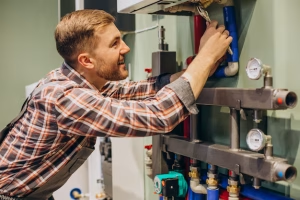

UK homes are overheating more often than most people realise. The UK Health Security Agency estimated 4,507 heat-associated deaths in England during summer 2022 (UKHSA, 2023), and the Met Office has confirmed the UK’s climate is warming with more frequent hot extremes (Met Office, 2024). At the same time, households still need dependable winter warmth without eye-watering bills. That is why modern heating and cooling systems have shifted from “nice to have” to “essential home infrastructure” for many properties.
This guide explains HVAC basics in plain English, how newer systems manage temperature and humidity, what “energy efficiency” really means in a UK context, and the practical temperature control tips you can apply straight away. You will also see what is changing in 2026, including tighter standards and smarter controls that help create energy efficient homes and better home comfort UK outcomes.
What home comfort really means in the UK (it is not just temperature)
In the UK, comfort is a blend of temperature, humidity, air movement, and indoor air quality. Many homes feel “cold” at 20°C if draughts and radiant heat loss from poorly insulated walls are high. Likewise, a bedroom can feel stifling at 24°C if humidity is elevated and there is limited ventilation.
Comfort factors that modern HVAC targets
These elements matter because UK housing stock includes lots of older, leaky buildings plus an increasing number of retrofits that can become too airtight without planned ventilation. The result is that modern heating and cooling systems increasingly focus on whole-home performance, not just a single heat source.
HVAC basics: heating and cooling systems explained simply
HVAC stands for heating, ventilation, and air conditioning. In practical terms, it is the combination of equipment and controls that keeps your home within a comfortable range year-round. If you are looking for HVAC explained simply, start with these building blocks.
Core components you will see in UK homes
One important 2026 reality: the best system is rarely a single product. Comfort and cost are mostly driven by how well the system is designed, installed, commissioned, and controlled in your specific property.
How modern systems deliver comfort more efficiently (and why it matters in 2026)
Newer heating and cooling systems are engineered to run longer at lower output rather than cycling aggressively on and off. This improves stability, reduces noise, and can cut energy waste. It also pairs well with UK weather patterns, where spring and autumn are often mild but changeable.
Heat pumps and low-temperature heating
Heat pumps move heat rather than generating it through combustion. That can make them highly efficient in the right conditions. The International Energy Agency reported that global heat pump sales grew around 11% in 2022 despite a slowdown from 2021 highs (IEA, 2023), and UK deployment is continuing to rise as policy support and installer capacity expand.
For UK homes, the practical comfort takeaway is this: heat pumps typically work best with good insulation, lower flow temperatures, and emitters sized for steady heat. If your home is draughty, fixing fabric issues first often improves comfort more than upgrading the heat source alone.
Inverter-driven air conditioning for UK summers
Modern AC systems use inverter compressors that modulate output. Instead of blasting cold air then stopping, they “cruise” to maintain setpoint. This helps manage humidity and avoids big temperature swings, which is increasingly valuable as heatwaves become more common.
Smarter controls: small changes, big comfort
Smart thermostats, TRVs, zoning, and weather compensation can reduce overheating and underheating room-by-room. The UK Government’s Energy Consumption in the UK dataset shows space heating remains the largest share of household energy use (DESNZ, 2024). That is why control improvements often deliver noticeable savings without changing the whole system.
System options compared: what works best for different UK property types
Choosing between boilers, heat pumps, hybrid systems, and AC depends on your insulation level, emitter type, electricity supply capacity, and comfort priorities. The table below summarises common choices for home comfort UK scenarios.
| System type | Best fit in UK homes | Comfort strengths | Watch-outs |
|---|---|---|---|
| Modern condensing boiler | Homes with existing radiator circuits and limited retrofit scope | Fast warm-up, familiar servicing, high output in cold snaps | Comfort drops if controls are poor; needs lower return temps to run efficiently |
| Air source heat pump (ASHP) | Well-insulated homes, upgraded radiators or underfloor heating | Steady temperatures, quiet continuous heating, good for zoning | Performance depends on design and commissioning; may need electrical upgrades |
| Hybrid (heat pump + boiler) | Mixed-insulation homes or phased retrofits | Efficient in mild weather, strong backup in extreme cold | Control strategy must be correct or savings disappear |
| Split air conditioning | Homes with summer overheating or specific hot rooms (lofts, bedrooms) | Rapid cooling, dehumidification, precise room control | Needs thoughtful placement to avoid drafts; plan condensate routing |
| MVHR (ventilation with heat recovery) | Airtight or newly retrofitted homes where ventilation is limited | Fresher air, reduces condensation risk, retains heat in winter | Requires ducting space and correct balancing; filters need maintenance |
Benchmark to keep in mind: the Energy Saving Trust notes that a well-designed heat pump system can reduce carbon compared with a gas boiler, and performance depends heavily on insulation and system temperatures (Energy Saving Trust, 2024). In other words, building fabric + controls + correct sizing is the comfort and cost “triple lock.”
Temperature control tips you can use this week (no major renovation required)
Comfort complaints often come down to controllability: rooms overshoot, bedrooms overheat, or the system runs at the wrong times. The wins below are realistic for homeowners and many small businesses, and they apply whether you have a boiler, heat pump, or AC.
Practical example: the “one room is always cold” problem
If a single room is cold, the issue is often radiator balancing, a stuck TRV, poor insulation on an external wall, or an undersized emitter. A simple diagnostic is to compare radiator pipe temperatures and bleed air if needed, then check if the room has higher heat loss (large window area, uninsulated solid wall). If you are on a heat pump, that room may need a larger radiator to deliver enough heat at lower flow temperatures.
Common mistakes to avoid (what experts see all the time)
Most comfort issues are preventable. These are the mistakes that repeatedly create high bills, uneven temperatures, and summer discomfort.
Actionable best practice: when changing any major component, ask for a written handover that includes setpoints, schedules, zoning logic, and maintenance intervals. You want the system to be operable, not just installed.
What is changing in 2026: trends shaping UK heating and cooling systems
In 2026, the direction of travel is clear: lower-carbon heat, smarter control, and more attention on overheating. These trends are showing up in product design, installer practices, and household expectations.
Trend 1: Overheating is now a mainstream design concern
Heat resilience is rising up the agenda because hot spells are more frequent and more impactful. The Climate Change Committee has repeatedly highlighted overheating risk in UK homes and the need for adaptation measures alongside decarbonisation (CCC, 2025). Practically, that means more demand for shading, better ventilation strategies, and targeted cooling in bedrooms and loft conversions.
Trend 2: Controls are becoming the brains of comfort
Smarter zoning, load shifting, and learning algorithms are increasingly normal, especially where homes have PV solar and battery storage. The aim is to keep comfort stable while running systems at lower cost periods, without turning the home into a science project.
Trend 3: Hybrid and phased retrofits are popular
Many UK properties will not go from old boiler to perfect heat pump overnight. Hybrid approaches, fabric-first upgrades, and staged emitter improvements are becoming a common pathway because they reduce disruption and spread costs.
When you want a comfort plan that fits your building
If you are trying to balance winter warmth, summer overheating, and running costs, it helps to get a system-level view rather than guessing at single upgrades. North Bristol Cooling & Heating Ltd can help you map practical next steps, from controls and balancing through to specifying modern heating and cooling systems that suit your property, usage, and comfort goals.
Conclusion: keeping UK comfort steady in every season
Modern heating and cooling systems are less about extreme heating or extreme cooling, and more about stable, controllable comfort with lower waste. In 2026, the most successful homes treat heating, cooling, ventilation, and controls as one joined-up strategy.
If your next step is figuring out what would actually work in your building, North Bristol Cooling & Heating Ltd is a solid place to start for practical, plain-English guidance on comfort, efficiency, and year-round temperature control.
Frequently asked questions (FAQs)
They are the combined equipment and controls that provide warmth in winter and manage overheating in summer. In the UK that often means a boiler or heat pump for heating, plus ventilation and sometimes air conditioning for cooling and dehumidification. Controls like smart thermostats and TRVs are a key part of the system.
If bedrooms regularly stay above comfortable sleeping temperatures during hot spells, or you struggle with high indoor humidity, targeted AC can help. Homes with loft conversions, large south-facing glazing, or limited ventilation tend to overheat more. Start with shading and ventilation improvements, then consider room-by-room cooling if needed.
Yes, when correctly designed for the property and paired with suitable insulation and emitters. They tend to deliver best comfort when running steadily at lower temperatures rather than in short bursts. Getting sizing and commissioning right is crucial.
Check insulation and drafts, verify controls and schedules, ensure radiators are balanced, and maintain ventilation. Replace or clean filters where applicable and keep outdoor units clear of obstructions. These basics solve a surprising number of comfort issues.
Start with smart TRVs or zoning, better thermostat placement, and weather compensation if your system supports it. Radiator balancing and fixing drafts can also stabilise room temperatures quickly. These upgrades often improve comfort more than raising the thermostat.
It means the home needs less energy to maintain comfort, usually through insulation, airtightness done properly, and efficient equipment with good controls. Efficient homes also manage humidity and ventilation so that comfort does not create condensation or air quality problems. Think “fabric first, then systems.”
A hybrid can be a good fit if your home is mid-retrofit or has higher heat loss that you plan to tackle later. A full heat pump setup often makes sense when insulation and emitters are ready for low-temperature heating. The right choice depends on your building, budget, and timeline.
Common causes include drafts, poor insulation, unbalanced radiators, or undersized emitters in that room. Thermostat location can also mislead the system by measuring a warmer or cooler area than the room you care about. A room-by-room assessment usually identifies the root cause quickly.
Spring and early autumn are often ideal because demand is lower and you can test the system before peak winter or summer. It also gives time to make small adjustments after commissioning. If you are adding cooling, plan before the first hot spell rather than during it.
They can, especially in homes with variable occupancy or rooms that are frequently overheated. The main savings come from better scheduling, zoning, and avoiding unnecessary run time rather than from the device itself. Pair smart controls with balancing and sensible setpoints for best results.